
The results found that attitudes around pharma TV advertising suggest certain age groups might be ready for an upgrade.
Key Findings
Findings showed that about a quarter of respondents have spoken with a doctor as a result of an ad, and generally, reactions seem to find these ads as most relevant for informing them about new medications. Different age groups also agree that pharmaceutical TV ads have a role to play in providing a helpful starting point for conversations with medical professionals.
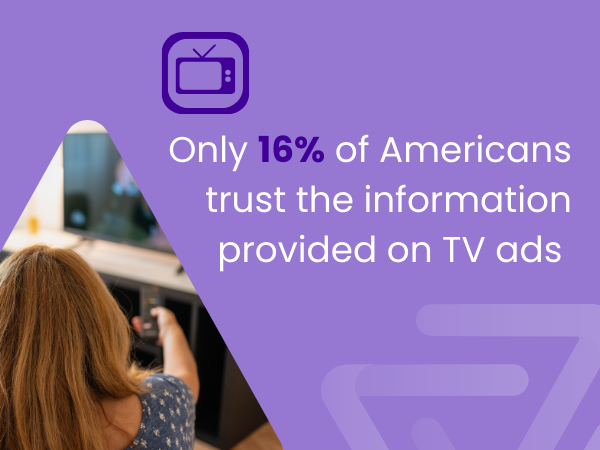
However, despite years on the air, some respondents still admit confusion over the time ads spend on side effects (particularly amongst younger audiences), and only 16% said they trust the information in the ads.
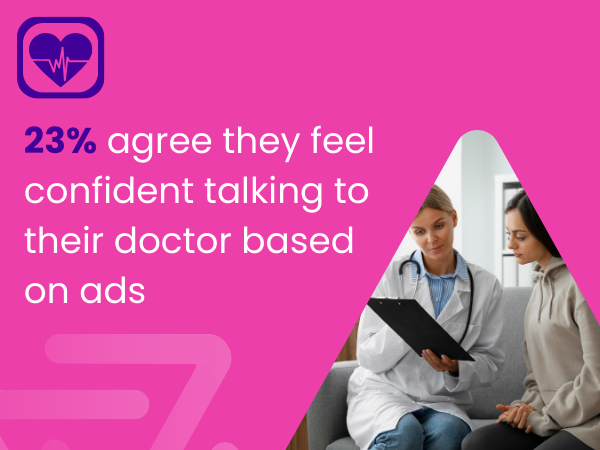
Digging deeper into this trend, 30% agree pharma TV ads may have gone too far with music as a distraction, with that number even higher amongst older populations. This could be impacting how they receive key messages and information needed to consider a conversation with their doctor. As it stands, only 23% of respondents agree they feel confident talking to their doctors based on ads. Yet, 34% still believe these ads help inform about new medications. Clearly, opportunity exists to further refine what consumers might glean from important information shared in these advertisements.
Additional Generational Differences
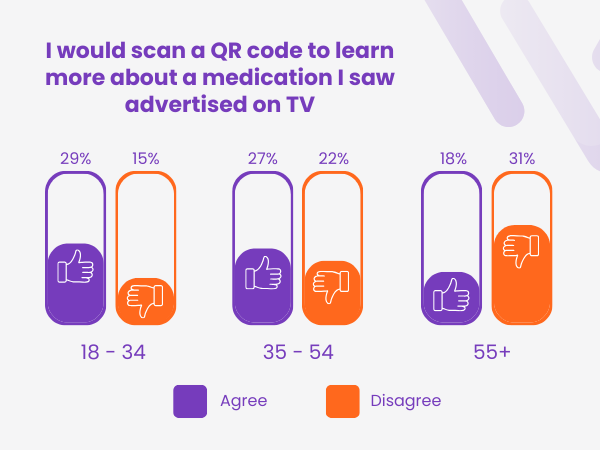
Engagement and perceptions around pharmaceutical TV ads does vary across generations. Not surprisingly, some younger individuals (26%) prefer to receive healthcare advertisements on social media. However, it is still individuals 55+ who are most likely to say they dislike watching healthcare ads on TV (36%). They are also the least likely to consider scanning a QR code to learn more about a medication (17% vs 28% for younger audiences).
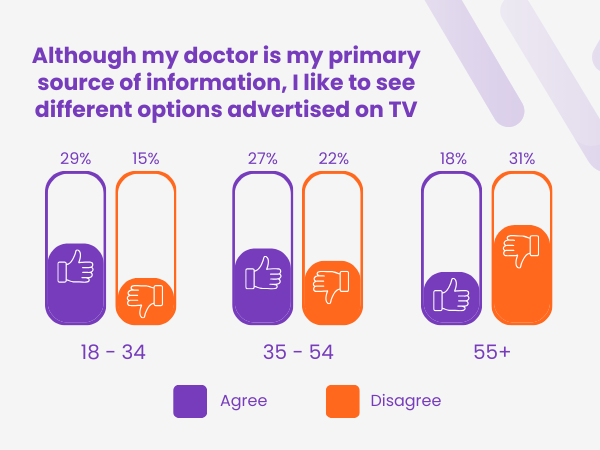
Younger age groups are also more likely to agree that although their doctor is their primary source of info, they like to see options for different medications advertised on TV (29% vs 18% for those 55+ years).
What Is Next to Optimize Pharma TV Ads?
So, what does this all mean for optimizing pharma ads?
First, an opportunity exists to gain further reach with younger audiences for TV advertising in healthcare. They like learning about new medications and want to build further trust of the information received. While this group does express confusion around the listing of side effects and fair balance, scanning a QR code is something this audience is open to considering (and inclusion could provide further opportunities to learn, and empower younger individuals to feel confident bringing up new medications with their physicians).
Second, the lower trust of pharma ads by older adults needs to be addressed. While they are less open to new technology like QR codes to help build that trust, changes like reducing the music and increasing factual details in TV ads could improve things. Despite these perceptions, many in this group are still taking information about new medications to their doctors for conversations. This clearly demonstrates that there is potential to better serve those over 55 and make it easier for them to explore medication options.
Final Thoughts
Our study made it clear that TV ads play an important role in building awareness of medications within the American public across all age groups. However, it may be time to consider doubling down on creating trust in these ads. In particular, respondents showed a lack of understanding of fair balance rules, which adds confusion about the long lists of side effects. This was particularly true amongst younger audiences, who are the ones most open to these types of ads. Investing time in some simple education, making ads less distracting and more focused, and leveraging new technologies such as QR codes could all help make pharma TV ads more impactful.
Looking for more guidance on how to ensure your ads resonate with your audience? The TriVoca Health team is here to help.
Methodology
TriVoca Health coordinated an omnibus survey that ran from Oct. 10-14, 2025, targeting 1,000 nationally representative sample of US adults aged 18 and over. The data collection was completed by Sago.
Questions centered on perceptions of healthcare advertising showcased on television or social media. Respondents evaluated statements on a 1-7 agreement scale from strongly disagree to strongly agree.